The monuments were one of the first things that caught my eye when I entered Eastern Belgium. Not since Kosovo and/or Croatia have I seen so many soldiers' monuments in village centers. Belgium in general has always been one of the favorite battlefields of modern Europe, from Waterloo in the Napoleonic Wars through the Trench Wars in World War I, to the Battle of the Bulge in the Ardennes in World War II, and correspondingly quite a few Belgians fell in these wars, so there is a lot to commemorate.
The second thing that caught my eye is of course the Belgian flag, with its black-red-yellow color combination. However, given Belgium's military history, I feel there is a big gap between Belgium's flag, which is pretty much the color combination that most conveys in nature "Caution, I'm dangerous", and, well, Belgium itself*.
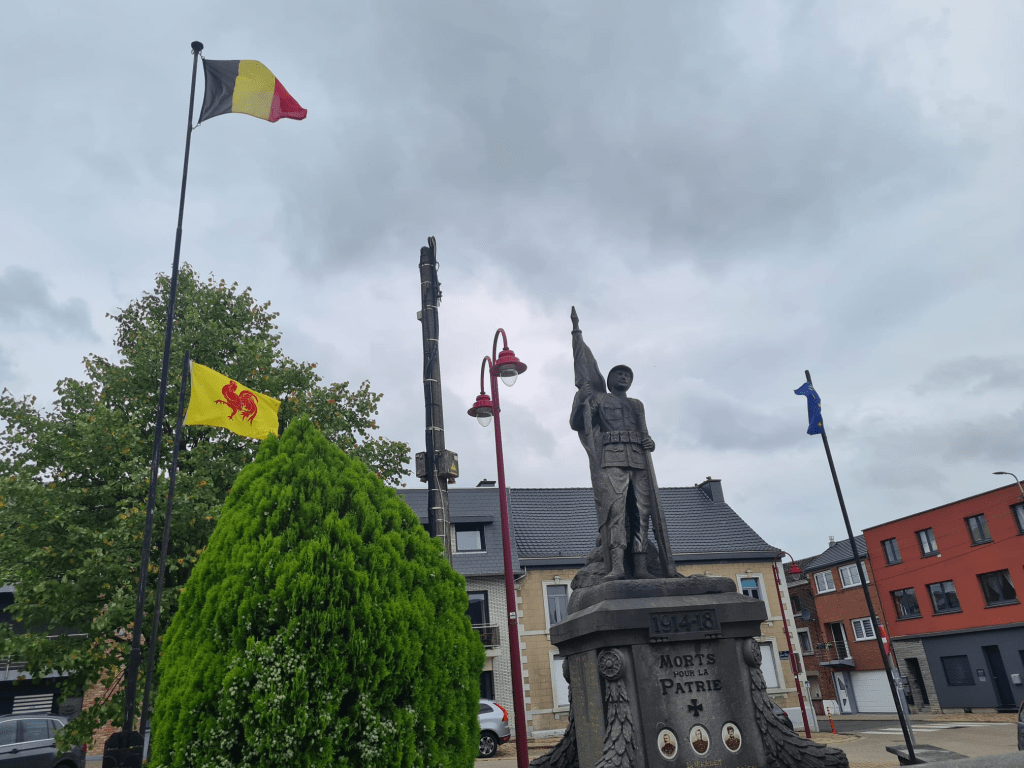
I couldn't help but wonder if the memory of the world wars, which is represented in these monuments, doesn't also represent some desire to create a unifying national narrative in a country that desperately needs such a narrative, but we'll get to that.
* Unless you are a resident of the Congo, then the colors of the Belgian flag do signify a danger of death for you, but we will also get to that later.
Antwerp
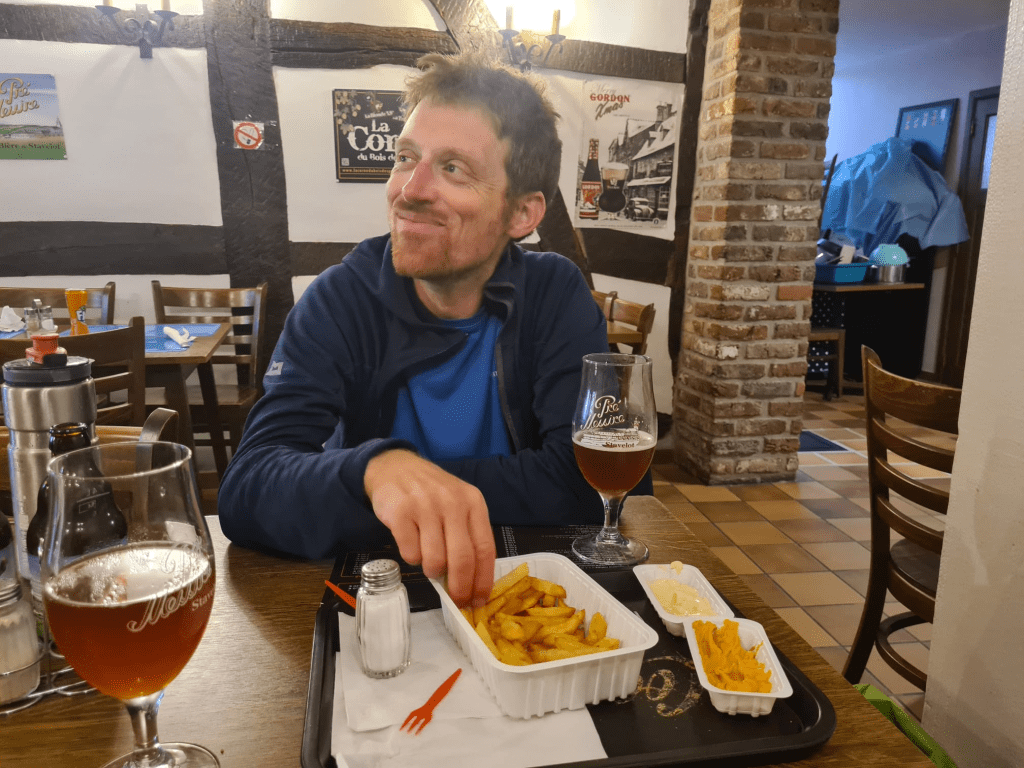
I spent my first round in Belgium in its east, where there are many hills, the fields are green, the fries are excellent and the weather in general is very indecisive but tends to be sullen. There, as mentioned, I rode with Joana, a friend from Ecotopia, and together we battled the deadly combination of rain, steep climbs and too many fries in the stomach (fries are Belgian in origin, not French, as any Belgian will bother to point out if you say the words "French fries". It's the American soldiers in World War II who are responsible for this confusion).
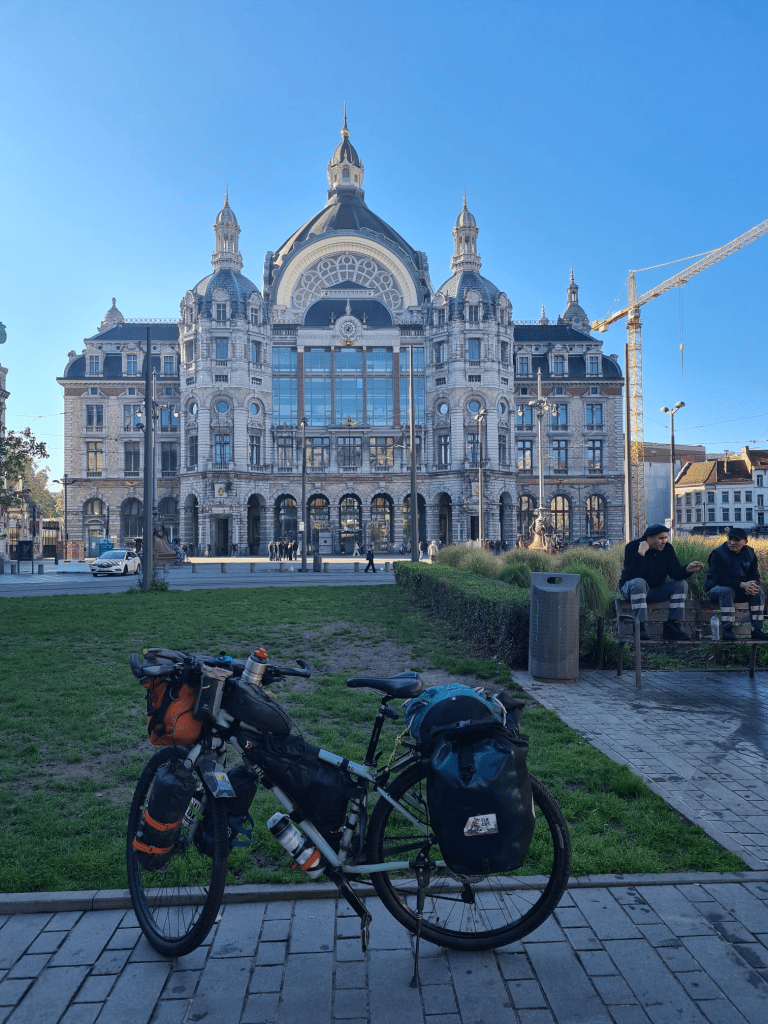
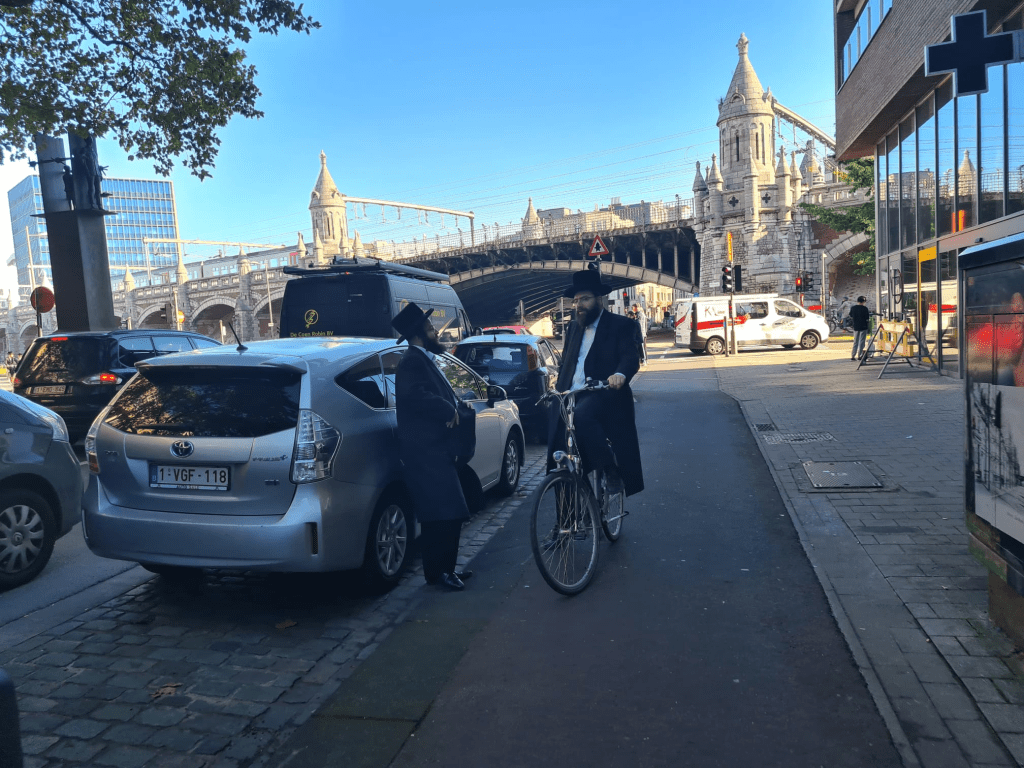
On my second tour of Belgium, coming down south from Holland, I arrived directly in Antwerp on my first day, and stayed with Steph, a nice guy who works in the marketing department of the port of Antwerp. And it's not a coincidence that I stayed with someone who works at the port. Everyone knows Antwerp as one of the world's diamond capitals (and as having a very large concentration of ultra-Orthodox Jews, and also the only place on the trip where I saw ultra-Orthodox on bicycles).
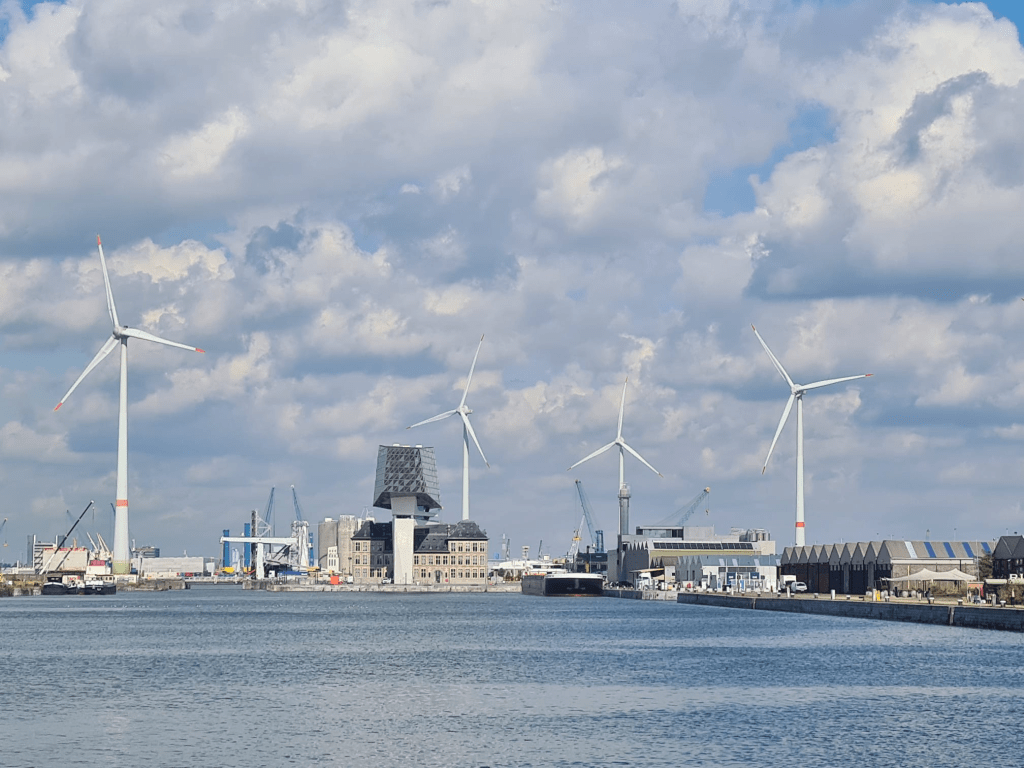
But before that, it is above all a port city, and one hell of a port. The port of Antwerp is huge, the second in Europe in terms of volume of goods (after Rotterdam) and the first in its land area, and the largest employer in the city by a wide margin. Somehow it turned out that almost all the time I spent in Antwerp revolved around this port. Among other things, I happened to stumble upon the Port Authority visitor center in Antwerp, and it was one of the most interesting and well-thought-out visitors centers I've been to. There's been a lot of talk about how they're trying to make the port greener and cleaner (for example, connecting the ships to external sockets so they don't have to run the engine to supply themselves with electricity when they dock), but given that the port also includes Europe's largest chemical production complex, no amount of wind turbines (and there are many of them) is going to offset the pollution there. On the third hand, we are the ones who consume everything that comes from there, so you can't throw stones in a glass house.
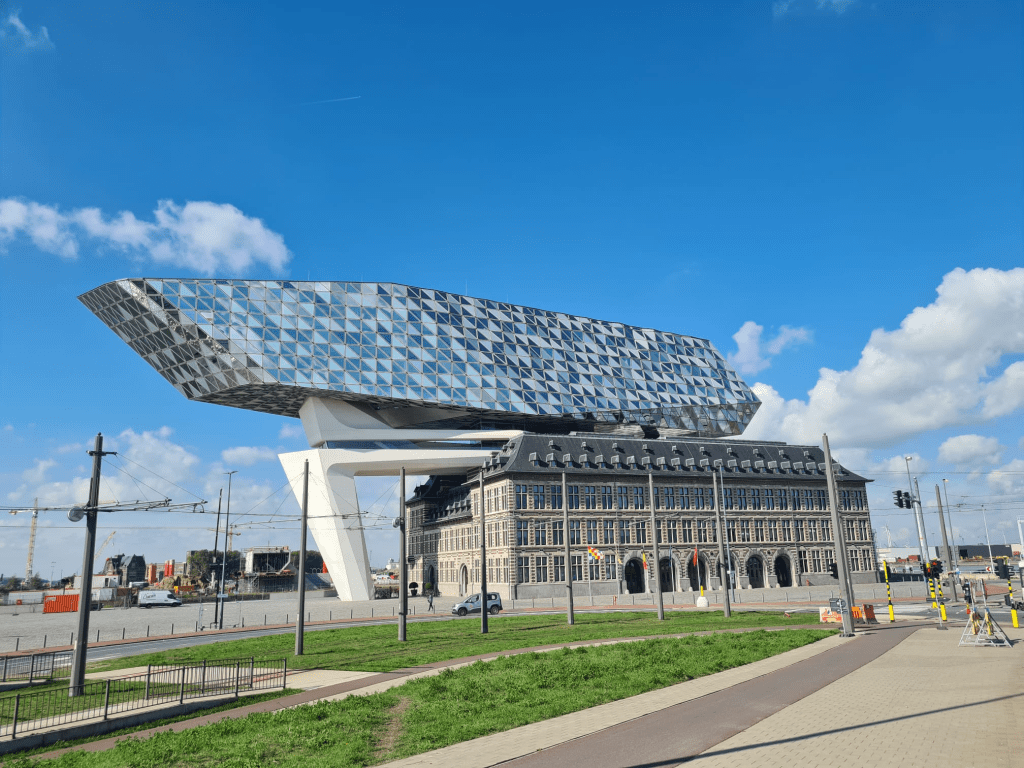
The fact that the port's visitor center was so fascinating impressed was equally improbable as the fact that the port authority administration building was one of the most beautiful buildings I'd seen on the trip so far. It's less surprising when you find out it's a building designed by Zaha Hadid. I have a hunch that the competition between Rotterdam and Antwerp pushed them to try to build the most impressive administration building they could , to impress potential customers and give them the feeling that Antwerp is an innovative and modern port (because they are already at the apex of unloading and loading time efficiency, so making an impression is all that remains, added top the fact that Rotterdam is full of cool buildings). Steph, as someone who works in the marketing department, told me that at the moment, with all the global chaos in the supply chain and the never-ending traffic jams in the ports, it doesn't really matter – the ship owners just go to the port that has free space at the time, to unload the goods, and it doesn't matter to them how much cool the place looks .
Antwerp is also an emerging fashion city, or at least tries to brand itself as such, but when I asked Steph how he would describe it, he said that in his eyes it is a city with ambitions to be cosmopolitan and international, but still feels like a very small city. It certainly felt that way to me, and it was very nice.
Brussels
Brussels is a mess. We call it a city, but in practice, that's stretching the term a lot. Administratively it's a collection of self-governing neighborhoods, with their own municipalities (a bit like the boroughs in London, only more extreme). Did you know that the first sewage treatment plant in Brussels was built in the nineties(!), because it took them until then to get their act together (before that they just poured everything into the river).
The best-known thing about Brussels, I guess, is that besides being the capital of Belgium, it is also the main capital of the European Union, and this raises the question of why choose the not-so-functioning city as the capital of the EU. I hope to talk a little more about it in the next post, about the European Union one, so I won't elaborate too much, I'll just say that after Antwerp, (and, with hindsight, compared to Ghent which I got to later), it definitely didn't feel very bike friendly to me, and in general felt a bit rough to me. But I still enjoyed it there.
Ghent and Bruges
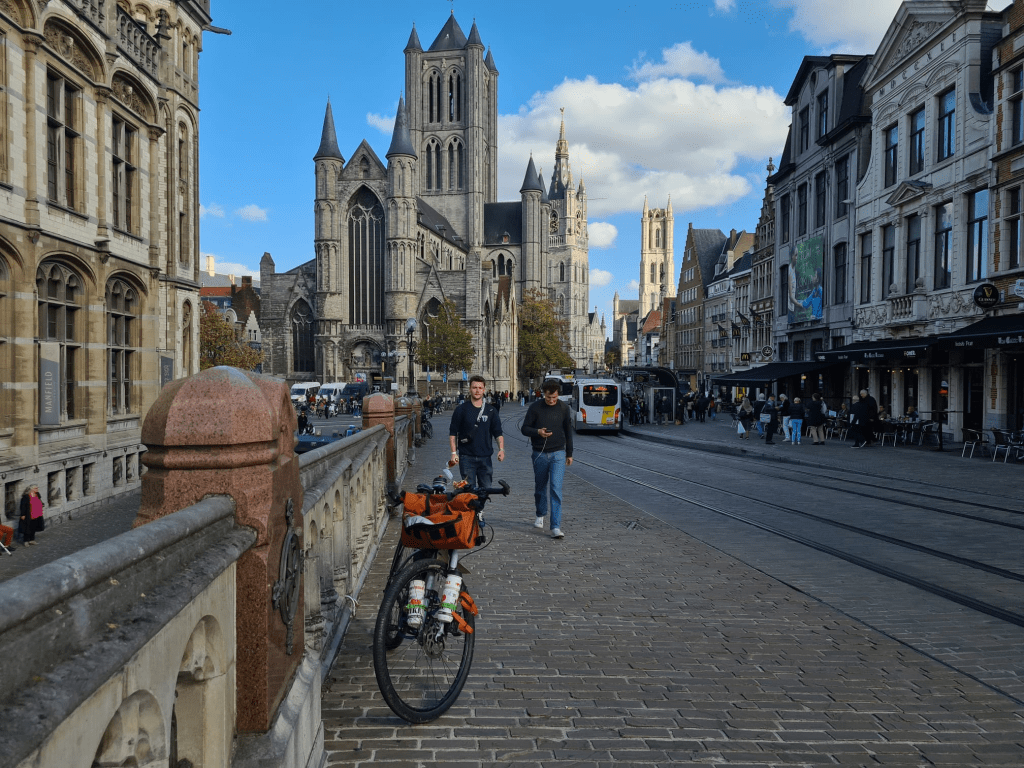
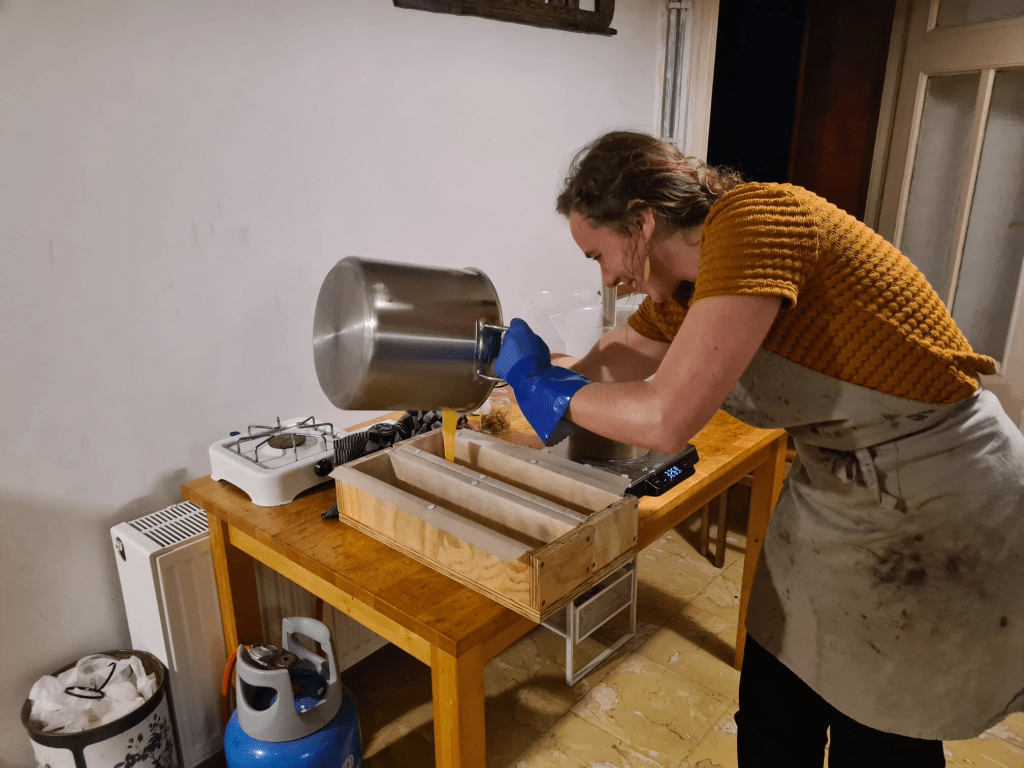
Ghent is my favorite city in Belgium, without a doubt. First of all, of course, it is probably the best cycling city in Belgium, with the best infrastructure I've seen outside the Netherlands, and full of riders. Other than that, the historic city center of Ghent is simply stunningly beautiful, much more than that of Bruges for example (sorry Bruges, you're just too crowded to be as impressive). And if we continue the comparison with Bruges, it is also much less touristy. It's not that there aren't any tourists in Ghent, there are a lot of them. But there is also a *city* that feels like a real city and not like a big museum exhibit (it's also a city that contains a big university, and that adds to the lively feeling). I also had the chance to meet one of the best tour guides I've ever met there, Sebastian, who helped me to get my thoughts about Belgium in order. But mostly, the reason I liked Ghent the most is my hosts there, a Belgian-Israeli couple (the girl is Belgian, the guy is Israeli) who are incredibly nice, and we bonded very well. They actually tried to live in Israel for a while, but since the Ministry of the Interior is doing its best to make it difficult for non-Jews to live in Israel, almost avowedly, they moved to Belgium. I had very interesting conversations with the guy about life in Belgium, and what it's like to immigrate to a foreign country when you're already an adult*. For her part, she showed me how she makes soap, which is what she does for a living quite successfully (and also gave me soap as a gift).
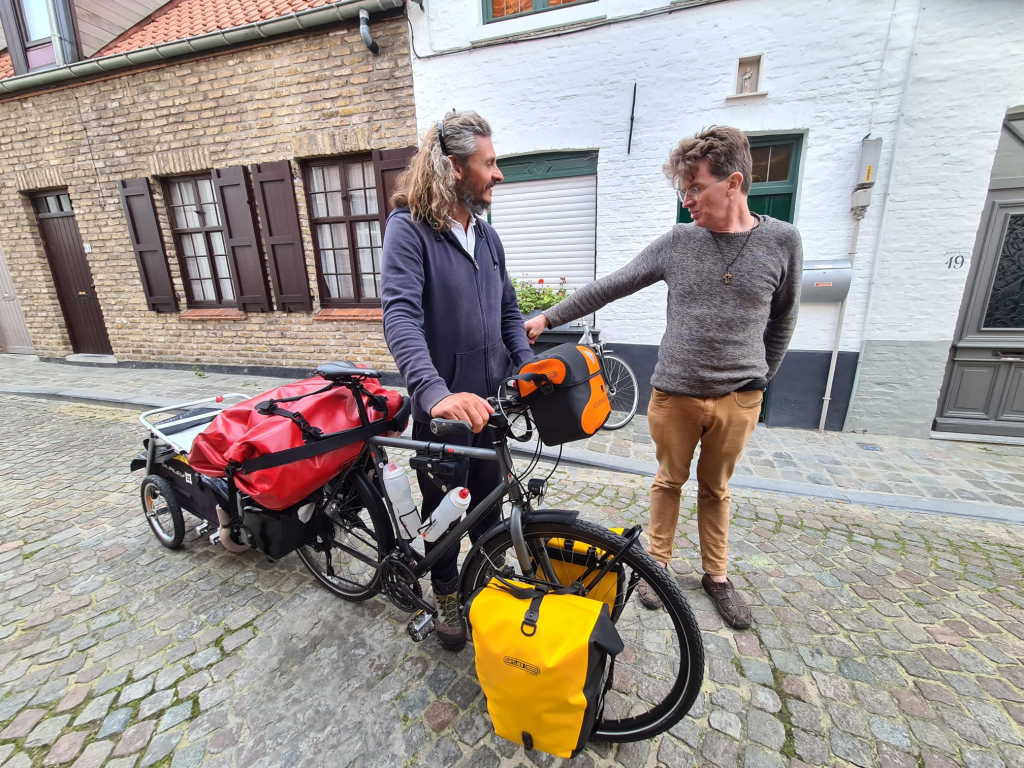
Bruges, on the other hand, I didn't really like. It is considered the tourism pearl of Belgium and attracts a lot of tourists from all over the world, many of them Brits who can get there easily, all of which makes it feel terribly touristy. The tour guide I was with said that part of that is due to the fact that Churchill really loved it (he has quite a few paintings he painted of scenes in Bruges, especially of the Béguinage, which he said was the most beautiful place in the world for him) and tried to promote it as a tourist destination for the British after it was severely damaged in World War II. The main reason I stopped there was because one of my favorite movies in the world is called In Bruges and it takes place there, so I mostly went there for that, and very quickly, after going through all the places where the movie is filmed, I pretty much ran out of interest in the city.
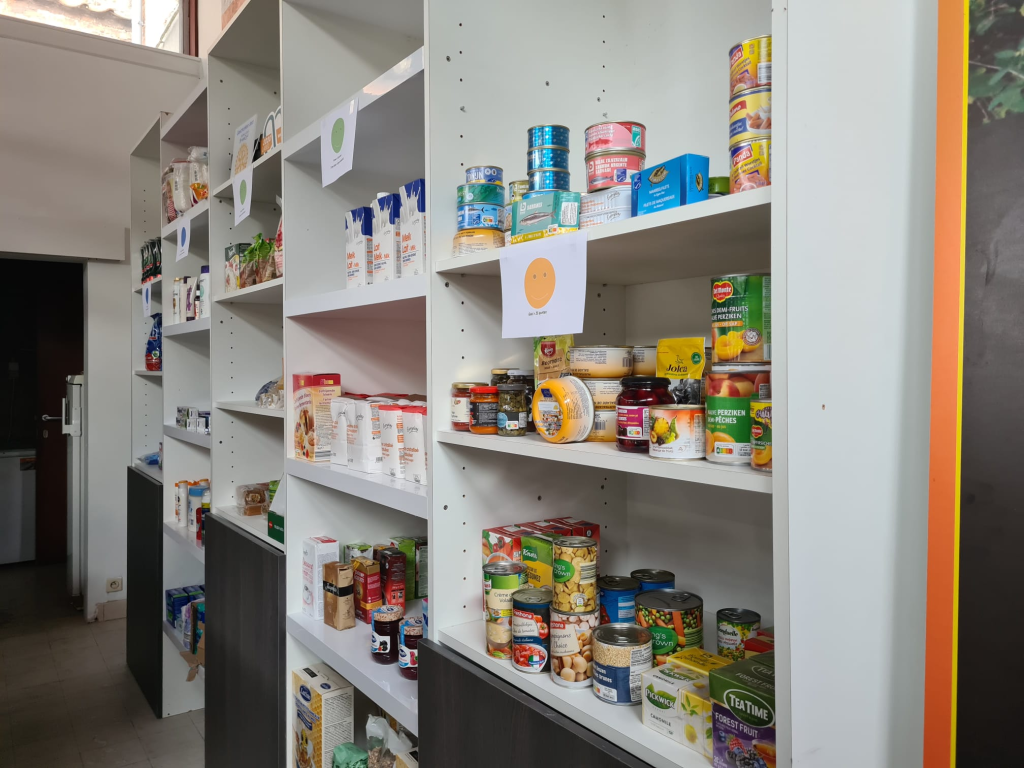
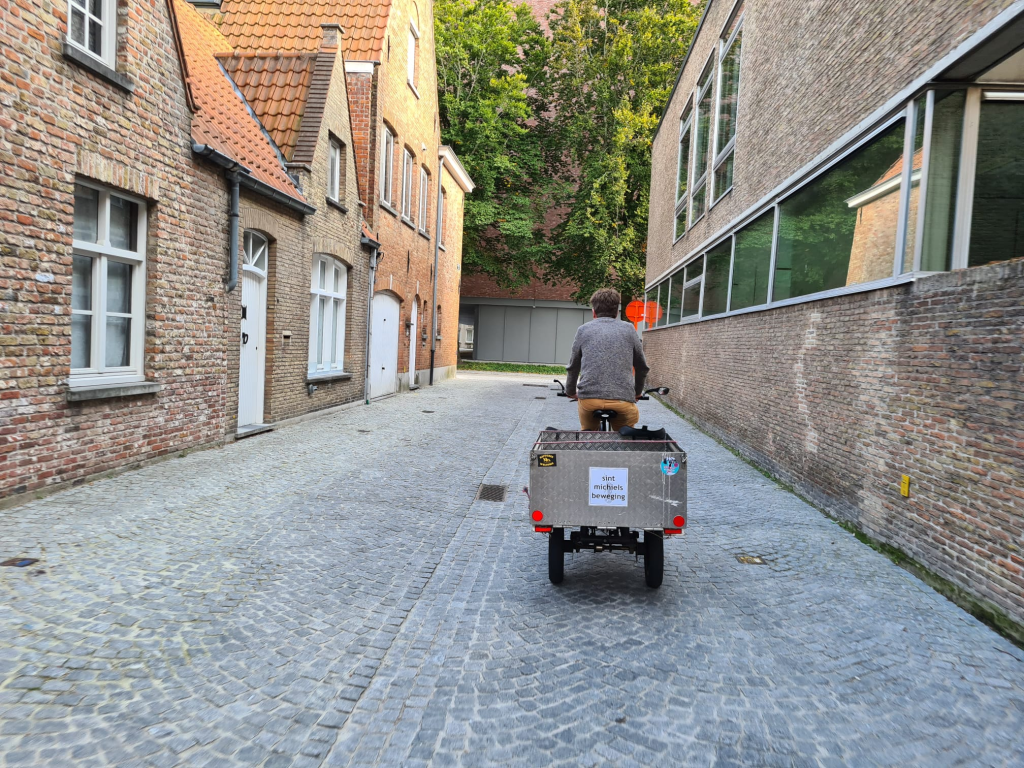
My most interesting experience in Bruges was hanging out with my host, a local Catholic priest named Luda, and helping him bring groceries to the social store he runs with a group of young volunteers from his community (and trying not to lose him while he zigzags on his electric tricycle through dozens of tourists). The social store is a beautiful concept, and I learned a little about how it works. Basically, every person in need fills out a questionnaire about his socioeconomic status (I don't remember if this was done in cooperation with the authorities), and accordingly receives a number of points, with which he can purchase products. Like money, in general, except that it only applies to this store. For some reason I assumed that there would mainly be immigrants there, but there were also quite a few local Belgians, some of them older. When I asked Luda about it, he said yes, it's not necessarily immigrants, it's sometimes let's say a single mother of four who had fallen on hard times. It felt like a slightly dissonant experience, walking around with groceries for the poor in a city that radiates so much wealth and is full of tourists, but in the end it's like that everywhere. Incidentally, when I asked how they pay rent on the store, he said they don't, and that it's church property. Very convenient. and shows that good things can also be done with church property.
And it's not like there's much to do with this property anyway. Like the Netherlands, Belgium is also going through a deep secularization process, and Luda said that the congregation in an average church is at best 30 men and women. He specifically focuses on the youth community, because they realized that a young person who wants to participate in a religious community would not feel very connected to a community of 30 people, most of whom are probably twenty to forty years older than him, so they created a community where young people can participate together. But, in general, he gave me the feeling that he was fighting a losing battle, and that made me a little sad. (Half-baked thought warning ahead) I know that religions, and specifically the Christian religion, have a lot of problematic historical baggage, and even today, well, these are not problem-free institutions, to say the least. But just as we would feel there is a loss in the disappearance of some indigenous culture/religion in South America, I think there is some loss in the complete disappearance of the Catholic Church in Belgium. The churches as buildings will always remain (until they are turned into gyms), But I think there is a difference between visiting an active church and a museum/archaeological exhibit. For better or for worse, there is so much cultural history there. And it's easy to talk about how institutionalized religion is a terrible thing (and many times it really is terrible), but it's different when you meet a pastor like Luda, who channels his energies and resources to help those in need while riding a tricycle.
Footnotes
*In short, and unsurprisingly – not easy. I think in a rough generalization, social relationships are particularly important to Israelis, and it is very difficult to make new friends at a late age, when you come to an environment where all the people around you already have enough friends, so why should they be your friends now. Added to that, the weather makes no concessions. An Israeli guy I met in Britain told me that when immigrating to a European country, it's very important to do it in the spring and then make as many connections as possible, because once winter comes, everyone is going to hide inside their houses, and you're just not going to meet any new people.
?Why Belgium
In general, I quite liked Belgium, but everyone, including the Belgians, agrees that it is a dysfunctional country. I assume that most of the readers here are more or less familiar with the division of Belgium into a French-speaking part and a Flemish-speaking part, which is not exactly the same as Dutch, but not exactly not the same either (I saw an analogy to the difference between British English and American English. also, technically, the French-speaking part is actually Wallonian-speaking, but whatever). Just to add to the mess, there is another small German-speaking part of northeastern Belgium, which is mostly included in Wallonia administratively. I knew that too, but what I didn't realize was how deep this division is.
Belgium, in general, behaves like two different countries on a practical level. For example, there is no unified bike path map for all of Belgium, only for the Flemish part and the Wallonian part separately. But it's not like there are 2 different governments there. Oh no, two governments is for amateurs. Little Belgium has no less than 6 different governments! In the constitution! Because there is the federal government, and naturally there are governments of the Wallonian part and the Flemish part. But Brussels also has a separate government, because it is a jumbled mess in itself. Then, since there are Walloons who live in both Wallonia and Brussels (and sometimes a little in Flanders), there is also a government of the French community, whose powers I don't fully understand, but which deals with the fields of education and culture. And if the French have a community government, then obviously the German minority in Wallonia also has a community government. Only the Flemish decided that the government of a Flemish community was an unnecessary duplication with the government of Flanders and united them, because they are into being efficient.
In practice, there is almost no interaction between the Wallonian and the Flemish. Each lives in their own communities/neighborhoods/cities and does not come into contact with the other group that much. It seems that these are really two different countries that somehow share the same flag. A dysfunctional marriage par excellence. And this raises the question – how did we even get to this situation? And no less important than that – and why do they still stay together?
Where did Belgium come from?
I tried to read up about the first question, but I was unable to distill an unequivocal answer. You can start it from the same place where you can start explaining many strange political situations throughout Europe – our old friends, the Habsburgs*. In the case of Belgium, well, the House of Habsburg (the Spanish part of it) ruled the Low Countries (what we know as the Netherlands, Belgium and Luxembourg), but due to a severe case of mismanagement (and of course religious wars), the part that is now the Netherlands declared independence. The Flemish part of Belgium also tried to gain independence but failed. And so, it turned out that for several centuries, the House of Habsburg ruled over this common area. The southern part of which bordered France was inhabited by French speakers, and Flemish speakers livedin the northern part. In 1815, after the Napoleonic wars, the powers decided to give this region of land (which in the meantime had passed to the Austrian Habsburgs, who didn't really want it anyway) to the united Dutch kingdom that was established after the war.
However, after 15 years of mismanagement also by the Dutch (a relatively rare thing for them), they managed to annoy more or less all parts of the population there. They pissed off the Catholics by a policy that promoted the Protestant religion, they pissed off the liberals by having far fewer Belgian representatives in the government and parliament (even though there were more Belgians than Dutch in the kingdom at that point), and they obviously pissed off the French-speaking Wallonians by virtue of being Dutch. Most importantly, they somehow managed to annoy the Flemish inhabitants of Belgium as well. So in 1830 a brief revolution broke out that removed Dutch rule, which probably included the only time in history that a revolution started due to an opera performance. But it's still only one turtle down – why did the Flemish side, which was Protestant, and spoke mostly Dutch, even chose to join this rebellion? It is difficult to give a clear or short answer. A (Flemish) tour guide on the tour I did in Brussels claimed that the French-speaking elite (and the elite at that time really was mostly French speaking) brainwashed the Flemish peasants into blaming the government in the Netherlands for all their troubles, including the drought. But it seems, at least from what I've read and talked to other people, that this is a very superficial answer. It is likely that, at least for a large part of the Flemish speakers, their identification as Flemish-speaking Belgians was stronger than their identification as Dutch speakers, since they nevertheless lived as a separate entity for hundreds of years, even if under Spanish/Austrian occupation, and the government in Amsterdam was distant and alien to them. Not all of them supported the struggle for independence (not all Wallonians either, by the way, some wanted to remain under Dutch rule ), but enough of them did.
However, unlike Switzerland, which created a federal state that more or less respects all the different ethnic groups that live there (Germans, French, Italians), the French speaking political elite did their best to eradicate the Dutch language, which they identified as the language of the "occupier". But, as I mentioned, it's a language that half of the population speaks, and who determined, for example, that all government affairs, the academy and the army be conducted in French, which immediately created alienation and antagonism straight out of the gate between the two parts of Belgium, and it didn't exactly improve from there. During the German occupation in World War I there were Flemish separatists who welcomed the arrival of their "German cousins", for example.
Interim Note – Kingdom of Belgium
Belgium is one of those European countries that still has a royal house. The concept of a royal house in modern times is very intriguing to me, and every country I've been in I've tried to understand how there is still a royal house, and how the process of transferring power from the monarchy to an elected government actually happened. There are several types of stories in this genre, from the English story of a gradual transfer of power over centuries (and Sweden more or less falls into this model as well), to a rapid and violent change in a series of revolutions (France, Russia)*. Belgium is different in this sense in that the Belgian monarchy is a very young monarchy, and when the Belgians declared independence in 1830, they did what seemed logical to them at the time and mail-ordered a king, because that's what you did at the time to be considered a serious country (even Mexico had a short-lived and tragic European king named Maximilian). They turned to some relatively unknown nobleman named Leopold from a small principality in Bavaria (after other candidates who were too pro-French or pro-Dutch were rejected) and offered him to be king, and he went with them. But Belgium originally started as a constitutional monarchy, that is, the king was not an absolute ruler at any point, and the parliament, which actually elected the king, had the real power. A good example of this is what happened with Leopold II, the son of Leopold. Through good relations with the great powers, he managed to get himself a large piece of what we call the Congo, and established the Congo Free State there, which did not belong to Belgium but directly to him. It was actually a slave colony (without the part of putting them on ships) and is considered one of the most horrible atrocities of the colonial enterprise**. There are no exact estimates of the number of people who died there, because it is not known from the start how many people lived in the Congo at the time, but the estimates range from one million to 15 million people, or something between a quarter and a half of the country's population. The atrocities were so terrible (and were a significant embarrassment to Belgium in the international arena) that the Belgian government intervened and confiscated the "Congo Free State" from it, because in the end they had the power, and that is actually the point.
*The most interesting story I came across is that of the Spanish monarchy. Not only did the monarchy survive Franco's rule, it seems that the Spanish king at the time was a very significant and surprising factor in the democratization of post-Franco Spain. But this is only a superficial impression.
**By the way, the current Belgian king "expressed regret" not long ago to the people of the Congo for what Belgium did there. It was not an official apology , because an official apology can lead to demands for compensation, and who wants that. Be that as it may, to this day the story of the Congo is not something that is taught in schools in Belgium.
***The monarchy in Belgium almost met its end during World War II, when the Belgian king declared surrender to the Germans, while the government claimed he had no authority to do such a thing, but in the end the Belgians compromised on just kicking that particular king out.
So why is there Belgium after all?
The answer to the second question is relatively simple, it seems to me, and is similar to the answer to why people stay in dysfunctional marriages – because of inertia, and that breaking up the package would be too complicated (for example, what do we do with the children/Brussels?).
The one who has historically pushed for separation is the Flemish side. I haven't spoken to enough Walloons to understand how they see the situation, but the Flemish totally feel that the Walloon side is dragging them down, and indeed, after decades in which the Flemish side has been the poorer of the two (and still handed over more taxes than it got back), for the last few decades The situation is changing, and in recent decades (since the 1960s) the Flemish side is the economically stronger side, with all the high-tech companies and international trade (Antwerp, the second largest port in Europe, is in Flanders, for example). And yet, it seems to me that the political elite is still mostly French (the royal house, for example, still doesn't really speak Flemish). I have heard statements that this situation is gradually changing, because money eventually translates into political power (though not always).
There are currently several Flemish separatist movements, some of which support full independence, and some of which support annexation back to the Netherlands. And yet, surveys show that the majority of Flemish people (60%+) still support staying in Belgium. It's not an overwhelming majority, but it's a majority. Why? I do not know. Most people probably prefer the status quo. When I asked the tour guide I was with in Ghent** if he, as a Flemish person, regrets the fact that they broke up with the Netherlands (because they could have been part of a much more prosperous and developed country), he laughed and said that yes, sometimes, but then he meets a Dutch person and gets angry, and it passes. He does not think that there is any logic in breaking the country up in two, because then it turns both parts into tiny and powerless states. And regarding annexation back to the Netherlands, he said that if that happens, in all socioeconomic respects they will be far behind, which means they will be the Wallonia of the Netherlands, and then who will they patronize over?
Further
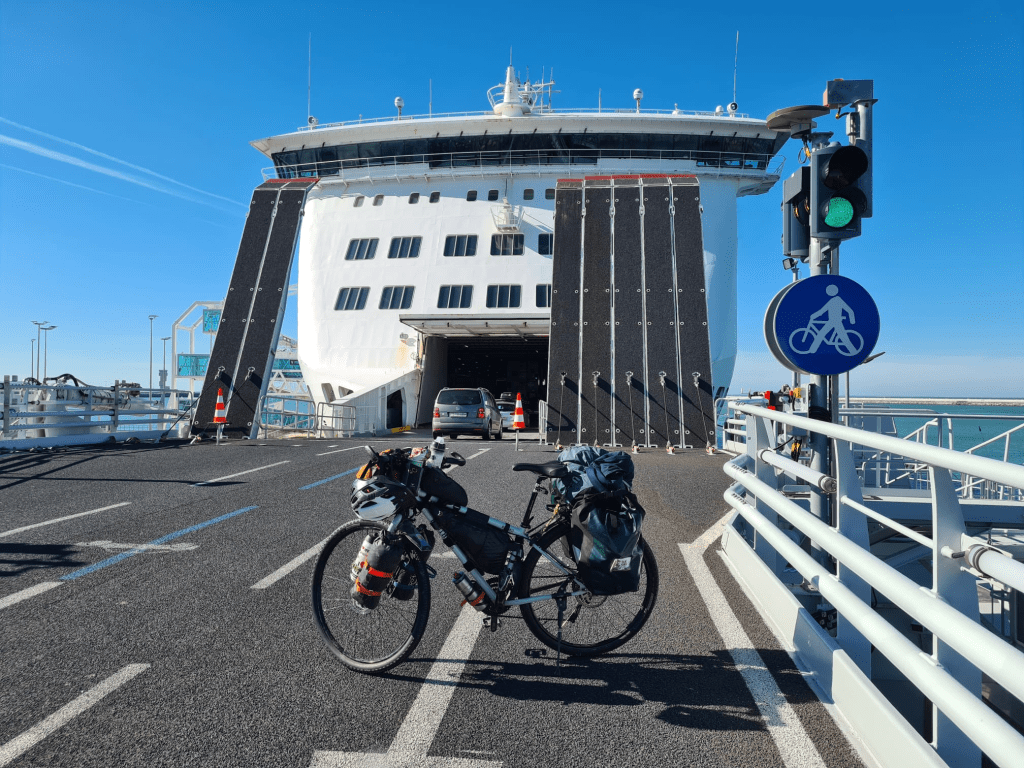
From Bruges I crossed back to France, to Dunkirk. It was a pretty tough day, with a headwind coming from the sea the whole way, but luckily I was joined by Colin, my visiting host from Arlon, who rode most of the day before me and broke the wind for me (she's a super serious rider). From Dunkirk I galloped to calais, and caught at the very last moment, the ferry that took me from France to the shores of England. I think it will take me some time to summarize the time I spent in England, I will need some perspective and distance. But that's okay, because in the meantime I have a lot to say about another place I spent a lot of time on this trip, a place I call the FPFP, or in its full name, the Franco-Prussian Friendship Project. And boy, is there is much to be said of it.
 יצאתי לשאוף קצת רוח