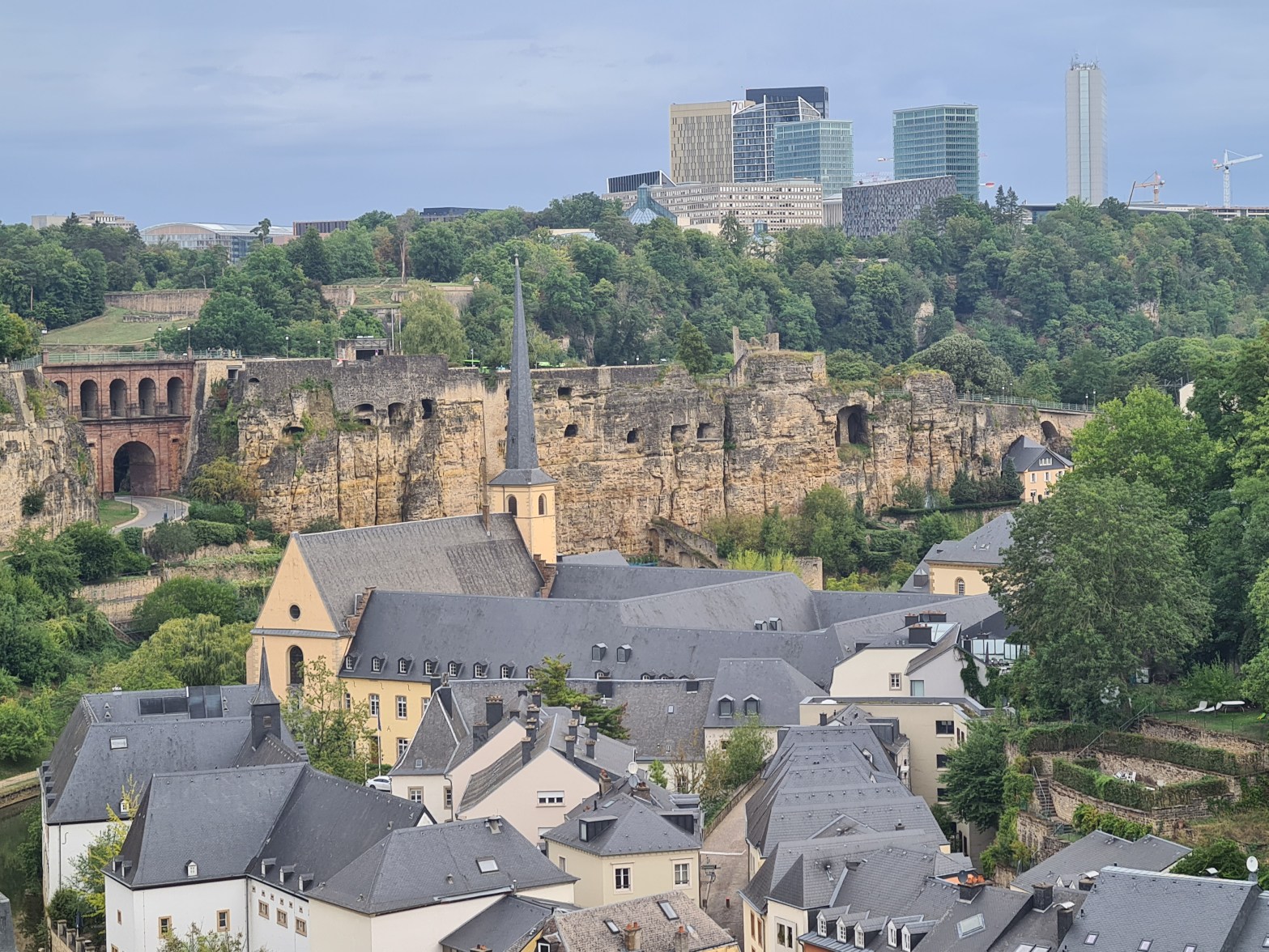
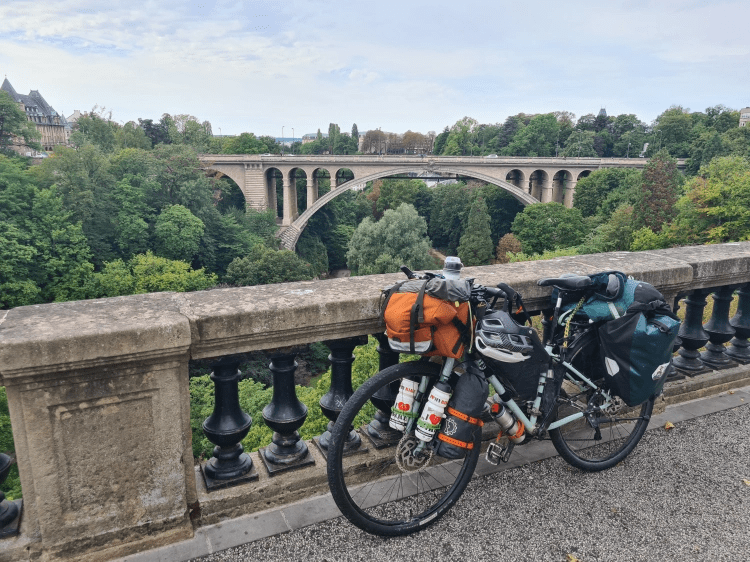
I came to Luxembourg with one aim – to understand what this tiny country is all about. Only this tiny size seems so… strange, between the two huge territories of Germany and France. As a resident of a country that doesn't exactly manage to get its name within its territory on world maps, and knowing that there is a complex story there, I wondered how Luxembourg came to be. and also, i was very curious what's it's like to live in such a tiny state. so yeah, i had some questions.
and boy, did I get some interesting answers.
stuck in the middle
The first thing I realized is that I have a rather anachronistic perception of "states", viewing them as something that was always some huge whale. If you look back 200 or so years, or even less, all of Europe was full of small and independent kingdoms, from the city-states of northern Italy to the countless principalities of Germany. One of the most important historical processes of the last 200 years in Europe was the consolidation of many of these independent entities into two large states – the Risorgimento (the union of Italy under the House of Savoy), and the Blood and Iron of Bismarck which created Germany. Switzerland is also a union of 25 entities that thought they had a better chance of surviving in the world together than separately (but kept a very federal structure). The French, for their part, swallowed most of the small kingdoms around them into one kingdom even before that (like Alsace and Lorraine). This is of course not a one-way process – Belgium, for example, split from the Netherlands in 1830 (but it was a very forced marriage from the start), and I think we've talked enough about the breakup of Yugoslavia. But in the Luxembourg area, all these small principalities were simply swallowed up by Germany and France. So the next question is – why Luxenburg was not swallowed as well.
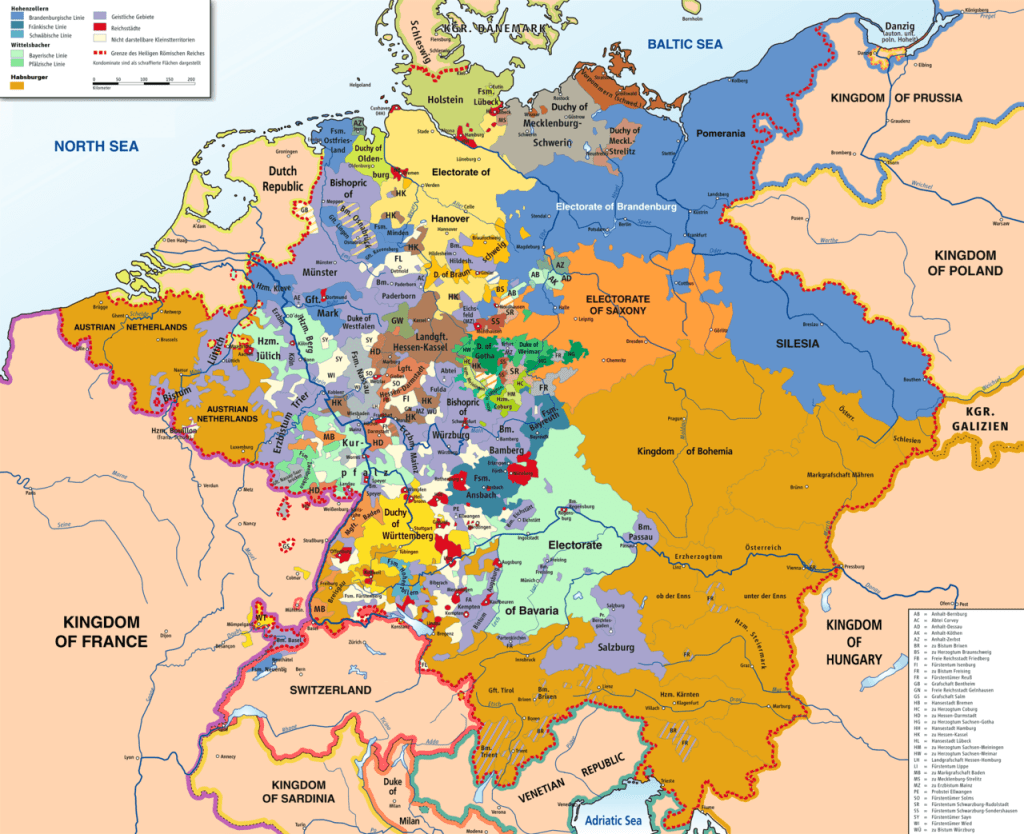
The answer is complex. First of all, it should be said that Luxembourg was not always a small and insignificant-looking country. For several centuries, the Duchy of Luxembourg was one of Europe's most powerful aristocratic houses, competing head-to-head with the House of Habsburg for control of the Holy Roman Empire. But in 1443 there were no male heirs left to the duchy, and control of it and its territories passed to other noble houses in Europe (with all the marriage systems and complex relationships of the European noble houses). Over the next 400+ years, Luxembourg began to change hands between the great powers, mainly the Austrians and the Spanish (but still within the House of Habsburg).
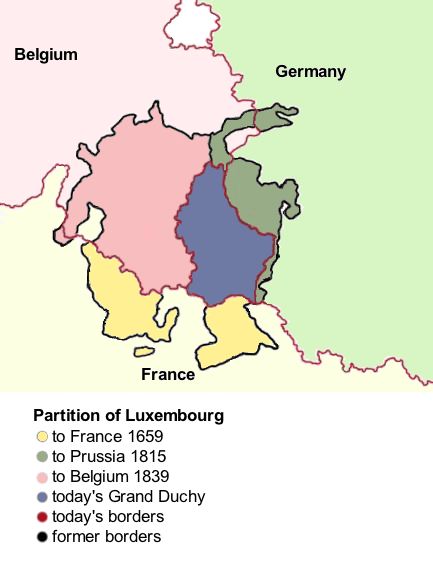
Secondly, it should be noted that in terms of its size, it was not always such a small duchy, the original territory of Luxembourg was about 4 times its current size. They just lost territory over the years to the French*, the Belgians and the Germans.
And above all, and this is perhaps the thing that surprised-me-the-most-but-shouldn't-have, Luxemburg has a very clear national identity. The Luxembourgish language , for example, is a distinct language (which is considered a West Germanic language, but with many words borrowed from French), and is one of the three official languages of Luxembourg. But all this, for example, did not help the Duchies of Alsace and Lorraine or the multitude of German principalities that were in the area, and Luxembourg lost its political independence long before them, and somehow re-emerged in the 19th century. So how did it happen?
Well, there are two possible answers here. One answer is that, as Jared Diamond has already taught us well in Guns Germs and Steel, and every real estate agent knows how to say as well- location location location. Or in other words – geography. And you can even say two types of geography that played out here.
The first type is the fact that Luxembourg sits exactly not only between what can be called the Francophone region and the Germanic region (for Alsace-Lorraine it didn't help), but it also sits between both of them and the Netherlands. A small country next to a large empire is always in danger of annexation. A country between two empires, on the other hand, is a buffer zone, and annexation to one can lead to a declaration of war by the other, as indeed happened to Luxembourg.
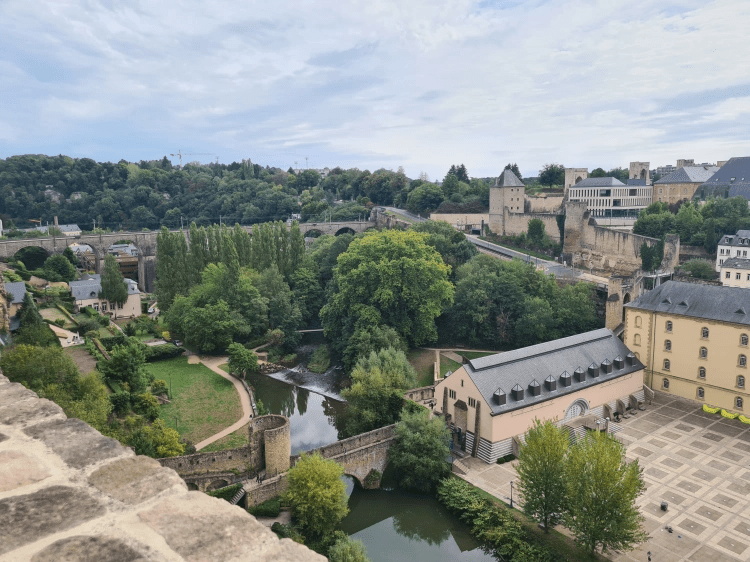
And the second important geographical detail is the topography of its capital city. Luxemburg-City was deliberately founded at the meeting point of two small but deep-cutting rivers, which left a kind of plateau surrounded by cliffs from three directions. So it is possible to concentrate all the fortifications in only one direction (west), making the city easy to defend. Over the years, an impressive system of fortifications was indeed established there, which included a formidable fortress, high walls and also a network of underground tunnels that helped to get from place to place quickly. This made Luxembourg City a city of significant strategic importance. It is not that it was impossible to conquer, it was conquered a couple of times, but you had to work for it. For example, in the wars of the French Revolution it took the French seven months to conquer it, and it received the nickname "Gibraltar of the North"**. Not much remains of these impressive fortifications today, but not for the usual reasons that fortifications usually disappear.
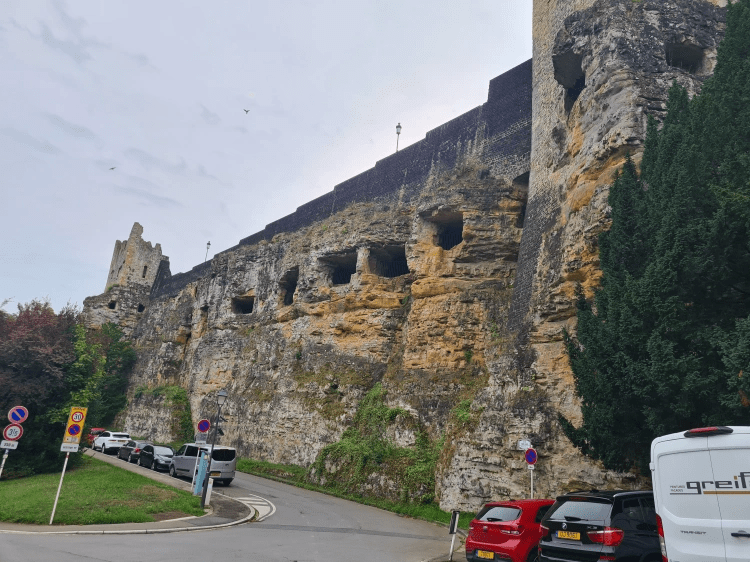
The point is that Luxembourg has become a very strategic area. When the Napoleonic Wars ended, the powers decided to annex Luxenburg to the Dutch crown (along with Belgium), but it also remained part of the German Confederation at the level of trade agreements, and with a Prussian army sitting there and controlling its fort, because Prussia was on the winning side and try to tell them otherwise. The Belgians tried to annex Luxenburg when they gained independence from the Dutch, and got the western part, but not Luxembourg city and it's surrounding, becuase Prussians really liked that fortress, and had no intention of giving it up.
In the middle of the 19th century, the historical rivalry that defined the fault line of Central Europe for hundreds of years, between Austria and France, began to be replaced by the rivalry that would define almost the next 100 years, the one between Prussia and France, and Luxenburg was right in the middle of this fault line. Accordingly, in 1868 the Luxembourg crisis broke out, which is complex and fascinating and full of complicated geopolitics, but its bottom line was that none of the main powers in Europe – France, Prussia and even England (which tried to protect the interests of Belgium, its strategic ally), could not allow Luxembourg and its fortifications to be in the possession of the other side, but no one was interested (at this point) in going to war against the other powers to get it for themselves. classic buffer zone politics. So they agreed to make it neutral, and to make sure it remained neutral, they dismantled all the walls and fortifications and underground tunnels, which A- makes the fort in Luxembourg one of the only forts to be destroyed by a peace treaty and not during a war and B- is a bit of a shame from the historical/archaeological perspective, because it must have been a really impressive fort. On the other hand, where the walls used to be, today there is a very nice and beautiful public park.
But all these changes of hands created in the residents of Luxembourg a sense of disgust at being a pawn in the struggle between great powers, and a clearer national identity began to develop. Luxembourg remained nominally under the Dutch crown for another 20 or so years, but in 1890 Wilhelm III, King of the Netherlands died, and Wilhelmina, his only daughter, ascended the Dutch throne. The Luxembourgers were like this "Oh, if you remember, our laws state that only male heirs can inherit a kingdom, so Byeeeee”, and 447 years after they lost their sovereignty due to a similar succession crisis, they declared independence. The duchy passed into the possession of some distant cousin of Wilhelm's, who had no idea what was going on in Luxembourg anyway, so he pretty much left them to fend for themselves.
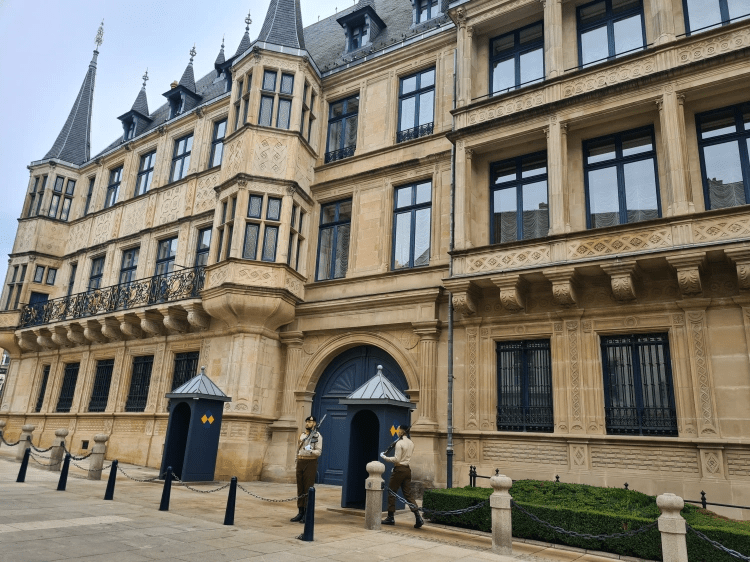
By the way, Luxembourg is *still* a duchy (archduchy, to be exact), and like neighboring Belgium and the Netherlands (and several other European countries) still have kings, Luxembourg head of state is still the archduke, who sits in a cute little palace in the center of the city and doesn't do much.
The first half of the 20th century was not easy for Luxembourg, with German occupation in the First World War, near-annexation to France after it, Nazi occupation and quite an extensive destruction in World War II***. While in World War I, Luxembourg still tried to maintain neutrality (even though Luxembourgers served and fell in the service of the entente Powers), in World War II Luxembourg was clearly and unequivocally on the side of the Allies. The second half of the 20th century was already a completely different story, but we'll get to that in a moment.
So yes, you can say that the reason Luxembourg is still independent is a result of its geography. But geography created the circumstances that made it possible, and it must be said that nothing *had* to happen the way it did. There is a considerable amount of luck and historical coincidences here. If Prussia or France had been stronger or more aggressive during the Luxembourg crisis, one of them might have annexed it. And if King Wilhelm had sons, it is possible that, like the Maastricht region, Luxembourg was part of the Netherlands today. I am aware that this is a somewhat anticlimactic answer, but what can you do, nothing in history is "destiny".
Footnotes
*A word about the French and territorial ambitions – while everyone likes to make fun of the French army, and in general the French today seem like a very nice and gentle people, during the last millennium it was often a very aggressive nation with expansionist tendencies, and with quite impressive military successes. They always saw Rhine as their natural border, and it was very difficult to convince them otherwise. Even if we put the madness that is the Napoleonic wars aside, I happened to pass through several cities where part of their story was "then Louis XIV came and conquered/besieged/burned it". Luxembourg was one of them.
**Although in my opinion the more appropriate analogy is " Constantinople of the North ", if you look at the shape and the fortifications, but I understand that I'm a being a petty nerd here
***Approximately 2.45% of the population of Luxembourg was killed in the war, including between 1,000 and 2,500 of the Luxembourg Jews who were murdered in the Holocaust. The underground tunnel system, which was part of the fortification system at the time, was also used as a hiding place for a significant part of those who survived, and also for the Luxembourgers who tried to evade the German conscription
?Stay as we are
So this is about why there is Luxembourg at all. But what is it like to *live* in Luxembourg?
Well, expensive and international. If there's one thing people know about Luxembourg it's that it's stinking rich. This is the country with the highest GDP per capita in the world (ok, Lichtenstein and Monaco have a higher GDP but come on, 40,000 citizens is not a country, it's an overly ambitious town) and as the guide of the tour I was on in Luxembourg said, everything in Luxembourg is small except for the salaries. After World War II, they invested a lot in their heavy industries, especially in iron, and experienced accelerated economic development. Their iron industry had an important significance beyond the economic growth it brought, and that it made Luxembourg one of the founders and main pushers of the ECSC, the European Coal and Iron Community, the forefather of the European Union, and Luxembourg is still a very active member of the Union. The Schengen area, meaning all the countries you can travel between without a passport within Europe, is named after a village in Luxembourg called Schengen, where the treaty that created this area was signed, and Luxenburg City is one of the four capitals of the European Union. Beyond prestige, it also brings a lot of international workers and creates a lot of jobs in Luxembourg. But there is no doubt that as of today the bulk of Luxembourg's economy relies on the finance and banking industry there, although heavy industry is still alive and kicking, and tourism also contributes its share (Luxembourg is a wonderfully pastoral place, including Luxembourg -City).
And all of this, together with its location among all the other countries, and the fact that from day 1, it was at the center of the European Union (when it was still only France, Belgium, the Netherlands, Germany and Luxembourg. Oh, and Italy), makes it an occupational gravity well, which pulls a lot there People from surrounding countries to work there. A little more than 600,000 residents live in all of Luxembourg, but every day about 200,000 (!) commuters from neighboring countries enter it. Yes, about a third of the country's population enters its border in the morning and leaves in the evening (including, for example, my hosts in Metz, France). It's pretty crazy.
And as we all know, commuting = traffic jams, and both the roads and the trains are packed every morning (by the way, public transport is free in Luxembourg). The Luxembourg government is trying to encourage people to work from home, but it's not that simple, because if a French person allegedly works for a Luxembourg company, but spends most of his working days in France, To whom should the workplace pay its employee taxes ? Luxembourg had to negotiate with each country separately to reach agreements that would allow people to work from home at least part of the time.
By the way, Luxenburg is the first country in Europe to fully legalize the cultivation of marijuana (in the Netherlands the use is legal but the production is illegal. A strange Dutch thing), which created another point of contention between it and France. The French were concerned that all the workers who move between Luxembourg and France every day would also bring with them loads of marijuana, and demanded that Luxembourg set up checkpoints at the exits from Luxembourg to France. According to the guide, the Luxembourg government was like, "no, grow up" (or the diplomatic equivalent).
By the way, one of the reasons that all those people travel to Luxemburg every day, and don't just move there is that Luxemburg-City is a terribly expensive place to live. Its wealth radiates out to the neighboring countries, and even in Arlon, across the border in Belgium, my host said that she sees how prices there are rising, like a kind of suburb of Luxembourg.
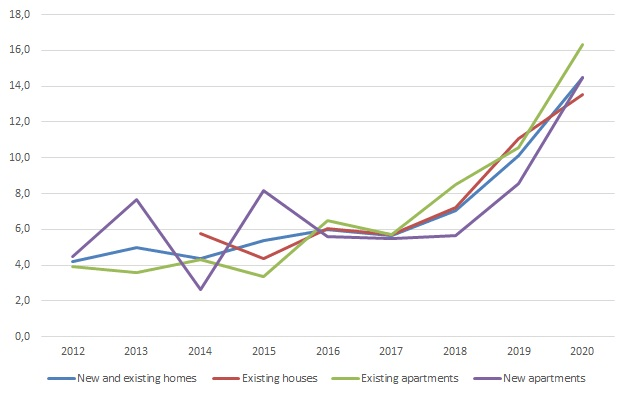
But a lot also move to live there. Of the 600,000 thousand inhabitants in Luxembourg, almost half are not citizens at all! About 47% are foreign citizens who came to live in Luxembourg, and if you look at Luxembourg City itself, this number already rises to 70%. In fact, Luxembourg is already becoming too expensive for the Luxembourgers themselves – quite a few Luxembourg citizens are moving to the suburbs or even beyond the border, to place like Arlon, because they can no longer afford to live in Luxembourg City itself. One of the biggest blows to the housing market in recent years, of all things, was Brexit – a lot of Brits work in the finance industry there, and could work there easily, being EU citizens, but after Brexit (apart from the fact that some British banks apparently opened branches in Luxembourg so they can operate more easily ) Many Brits had to show that they had an address in Luxembourg, or actually move there, in order to continue working there. Which means that a lot of Brits with money started buying apartments in Luxembourg, and prices shot up, pushing a lot of people to the suburbs and beyond.
Luxembourg is a true multilingual country, and while Luxembourgish is still the Native tongue of the Luxembourgers, German is used in the media and in the courts, and French is the official government language and appears on all street signs, and the language in which most businesses are conducted. Most Luxembourgers know at least one of them, if not the both*. In most of the shops you will enter in Luxenburg-City, it is likely that the seller will speak French as his native tongue, because he arrived this morning from France to work here. In addition, naturally for such a small country, much of the popular culture is imported from the neighboring countries. with all that accumulating, one can understand why the Luxembourgish language was declared an endangered language by Unesco – even though the absolute number of Luxembourgish speakers is the highest it has ever been (technically), their percentage in the Luxembourg population is decreasing.
And all of this raises questions about the future of the Luxembourgish identity, and what it is to be a Luxembourgish. Even if we neglect the Luxembourgers who were economically pushed across the border (because this is probably not a widespread phenomenon yet), the steady stream of migrant workers settling in Luxembourg means that the percentage of Luxembourg citizens in the general population is decreasing, and as mentioned in Luxembourg City itself they are already a minority today. One wonders how it is possible to maintain a situation in the long run where a country holds democratic elections that affect all residents, but only a minority of them are allowed to vote**. And as I said, there is a real fear that French will just slowly push out Luxembourgish as the main language in Luxembourg (as, by the way, has already happened to the local languages in Alsace and Lorraine, and even in Eastern Belgium, which was once part of Luxembourg), because it is simply more useful on a daily basis.
it is a real question whether Luxembourg, as a distinct national entity, which has survived 400 years of conquests, annexation attempts, a struggle between superpowers and two world wars, will survive its own economic success.
During the national awakening in the 19th century, a poem was written in Luxenburg that became the anthem of their quest for independence –
Kommt hier aus Francaise, Belgie, Preisen,
Mir wellen iech ons Hémecht weisen,
Frot dir no alle Seiten hin,
Mir welle bleiwe wat mir sin.
And in English translation –
Come here from France, Belgium, Prussia,
we want to show you our fatherland
ask in all directions,
We want to stay what we are.
The last line, "We want to remain as we are", has become the national motto of Luxembourg, which appears on monuments around town. And while Prussia, Belgium and France do come to see the fatherland every day, I have some doubts whether Luxembourg will stay what it is.
 יצאתי לשאוף קצת רוח